

The National Port Authority (NPA) has taken a landmark decision to convert all contract workers to permanent employment status, marking one of the most significant workforce reforms in the history of Liberia’s port sector. The move reflects a broader push for stronger governance and modernization across African ports, as institutions seek to align human capital development with the growth of the continent’s maritime economy.
A Milestone Decision for Liberia’s Port Workforce
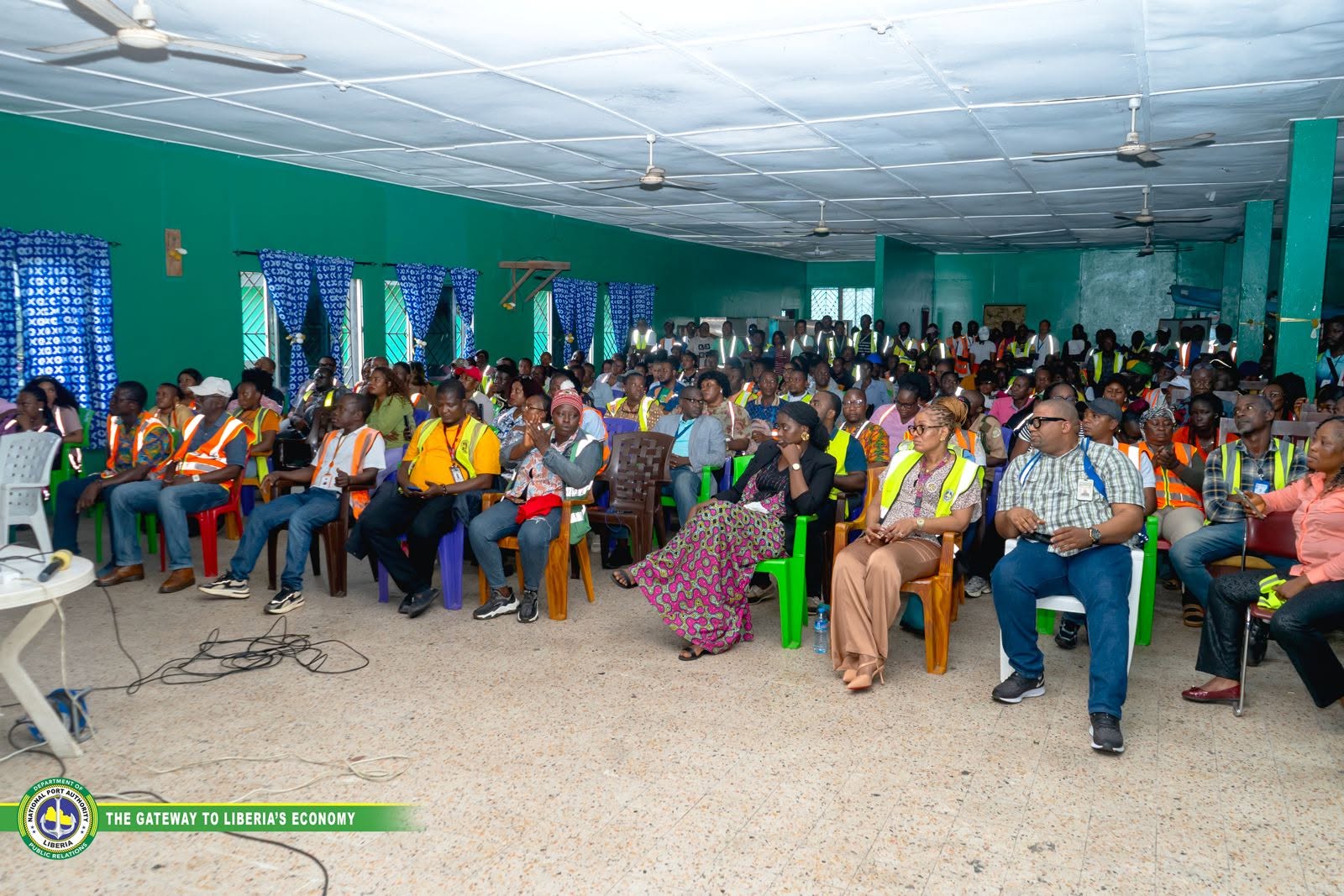
The Management of the National Port Authority, led by Hon. Sekou A. M. Dukuly, announced on July 22, 2026, that all contract employees at the NPA would be granted permanent status with immediate effect. The announcement was delivered during a general workforce meeting at the Freeport of Monrovia, presided over by Hon. James R. Bernard, Deputy Managing Director for Administration.
Speaking virtually from the Port of Le Havre, France, NPA Managing Director Hon. Sekou A. M. Dukuly thanked employees for their dedication, resilience, and daily sacrifices, noting that the institution’s progress rests on the strength of its workforce. “Without the workforce, there will be no National Port Authority,” he stated, underlining that every achievement recorded by the NPA stems from the collective effort of its staff.
This decision positions the Freeport of Monrovia among African ports actively investing in human resource reform as part of wider efforts to modernize port operations and improve performance portuaire en Afrique de l’Ouest.
Ending Years of Uncertainty for Contract Employees
According to Hon. Dukuly, successive administrations had struggled for years to resolve the transition of contract workers to permanent status. Many employees served the institution faithfully for extended periods while awaiting formal recognition of their positions.
The Managing Director described the regularization as the end of an era and the beginning of a new chapter for hundreds of workers whose long-term commitment has now been officially acknowledged. This reform illustrates how governance and workforce management remain central pillars of port development across the African continent, alongside infrastructure investment and trade facilitation.
No Salary Cuts, but Performance Will Drive Future Increases
NPA Management assured staff that the transition to permanent status will not trigger any reduction—or automatic increase—in salaries. All existing wages and benefits will remain intact, while newly regularized employees will now also access the additional benefits enjoyed by permanent staff.
Hon. Dukuly further indicated that future salary increments will be tied to performance, encouraging employees to prioritize professionalism, productivity, and excellence. Attendance and job performance, he said, will play a central role in future staff evaluations—an approach increasingly common among African maritime hubs seeking to strengthen operational efficiency and accountability.
Stricter Enforcement of Attendance Rules
As part of efforts to reinforce discipline and accountability, Management confirmed the strict enforcement of the NPA’s 10-day attendance policy. Employees have been urged to take their professional responsibilities seriously as the institution tightens internal governance standards.
Human Resource Executive Director Vashti Sirleaf reinforced this message, warning that reporting to work without carrying out assigned duties would result in appropriate administrative measures. She stressed that Management remains committed to building a culture of discipline, accountability, and high performance—values increasingly emphasized in the governance of ports across Africa.
A Reform With Regional Significance for African Port Governance
This large-scale regularization of contract workers stands as one of the most consequential workforce reforms in the NPA’s history. It reflects a growing trend among African ports to invest not only in infrastructure and logistics corridors, but also in the professionals who ensure daily port operations run efficiently.
As competition intensifies among West African maritime gateways and investment in port infrastructure accelerates across the continent, human capital reform is emerging as a key driver of port performance in Africa. By formally recognizing its workforce, the National Port Authority sends a clear signal: sustainable growth in Africa’s maritime economy depends as much on people as on infrastructure—a lesson likely to resonate across port authorities throughout the region.


